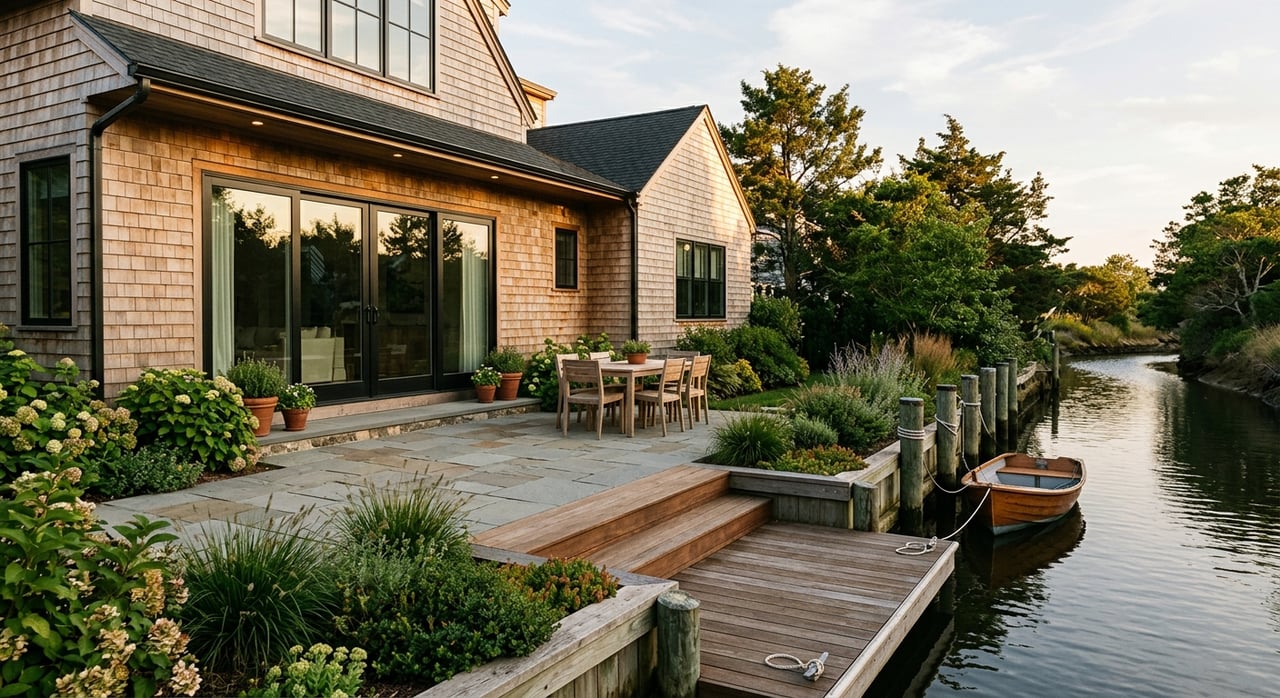
If you have been dreaming about a place in the Hamptons, you are not alone. A second home here can offer a true escape, but it also comes with local rules, financing differences, and year-round cost questions that catch many buyers off guard. The good news is that when you know what to expect, you can shop smarter and avoid expensive surprises. Let’s dive in.
Hamptons second-home buyers should expect a seasonal market
One of the biggest things to understand about the Hamptons is that this is a strongly seasonal housing market. East Hampton Town’s 2020 housing data show 8,842 occupied units and 12,813 vacant units, with 12,374 of those vacant units classified as seasonal. Southampton’s housing plan also notes that nearly half of its housing units are occupied on a seasonal basis.
That seasonal pattern shapes everything from inventory to how homes are used. In practical terms, many buyers are looking at properties designed for personal use during part of the year rather than dense, year-round multifamily living. It is a market heavily defined by detached homes and coastal lifestyle patterns.
What types of homes you will usually see
If you are starting your search, expect detached houses to make up most of the options. Southampton’s housing plan says single-family detached homes account for the overwhelming majority of the local housing stock. Attached housing plays a much smaller role.
That matters because your search may be less about choosing between many housing formats and more about finding the right fit within a detached-home market. You may see homes that vary widely in age, size, updates, and seasonal usability. In the Hamptons, your purchase decision is often tied as much to use case as to style.
Define your use before you tour homes
Before you fall in love with a property, get clear on how you want to use it. Are you buying a weekend escape, a summer house, a year-round second home, or a property you may use personally and rent at times? That answer should guide your search from day one.
This step is especially important because second-home financing and local rental rules can depend on the property’s intended use. A home that works perfectly for summer weekends may not be the right fit if you want regular winter use or plan to offset costs with rentals. A little clarity early on can save you time and frustration later.
Year-round use matters more than many buyers expect
For many buyers, a second home is not just a place to visit in July and August. You may want holiday weekends, shoulder-season stays, or flexible use throughout the year. That is why year-round suitability should be part of your evaluation.
Freddie Mac’s second-home guidance says a second home must generally be a one-unit property, be available for your personal use for more than half the year, and be suitable for year-round occupancy. The same guidance also notes that a property with seasonal limitations may still qualify in some cases if the appraisal supports it with comparable sales that have similar limitations.
This is a good reminder to look beyond the listing photos. Ask practical questions about access, off-season functionality, and whether the home truly matches the way you plan to use it.
Rental rules vary by town
If you think you may rent out your second home, even occasionally, you need to check the local rules before you buy. East Hampton and Southampton do not handle rentals the same way. A property’s location can change what is required.
In East Hampton, owners who rent residential property by the week, month, season, or year must register and obtain a Rental Registry Number. The town requires a $100 filing fee for a two-year term, a self-inspection checklist, and the registry number must appear in advertisements. East Hampton also states that this law does not apply inside the incorporated villages of East Hampton and Sag Harbor.
East Hampton also lists some exceptions. Owner-occupied homes rented only by the owner to immediate family do not need to register. Owner-occupied homes where the owner rents out one or two rooms also do not require registration.
Southampton has a different system. Any home rented for any period requires a rental permit, the minimum stay is 14 days, permits last two years, and permits do not transfer to a new owner. Southampton also states that owner-occupied room rentals of up to two bedrooms to no more than two boarders do not require a permit.
Taxes can affect your rental math
If you are planning to rent for short stays, taxes are another key part of the picture. Suffolk County imposes a 5.5 percent occupancy tax on short-term lodging of less than 30 days, including residences and tourist homes. The county also requires registration within ten days of the first rental and quarterly tax remittance.
New York State also imposes state and local sales tax on short-term rental occupancy effective March 1, 2025. According to Suffolk County, a guest becomes a permanent resident after 90 consecutive days. These rules can have a real impact on your expected rental income and your compliance responsibilities.
The bottom line is simple: do not assume rental income will be easy, automatic, or lightly regulated. In the Hamptons, the local rule stack matters.
Financing a second home is different
Many buyers are surprised to learn that financing a second home is not the same as financing a primary residence. Some low-down-payment options available for a principal residence do not apply to second homes. For example, Fannie Mae’s 97 percent loan-to-value options are limited to principal-residence transactions.
Freddie Mac also notes that rental income from a borrower’s second home may not be used as stable monthly income. That means you should not build your qualification plan around projected seasonal rent. Lenders will typically look closely at whether you can comfortably carry the property based on your own financial picture.
Freddie Mac’s guidance also points to reserves as part of the equation. Reserves are measured in months of the total housing payment, including principal and interest, property taxes, hazard insurance, HOA dues, and any secondary financing. In other words, lenders want to see that you have room in your budget after closing.
Budget beyond the mortgage payment
A Hamptons second home budget should be built on annual ownership costs, not just the monthly mortgage. According to CFPB guidance, a homeowner’s total payment can include principal, interest, property taxes, mortgage insurance, homeowner’s insurance, supplemental flood insurance, and HOA fees. Buyers should also budget for maintenance, repairs, utilities, and emergency reserves.
That bigger budget view matters even more in a coastal market. Flood risk should be checked early because homes in FEMA special flood hazard areas are likely to require flood insurance. Depending on the property, that can significantly change your carrying costs.
You may also want to think through seasonal maintenance items. Even if you do not live in the home year-round, the property still needs care, utilities, and planning for weather and upkeep. A realistic budget helps you enjoy the home instead of stressing over it.
Closing costs can be substantial
When buying in the Hamptons, it is important to prepare for closing costs that can go well beyond standard expectations. New York imposes a real estate transfer tax. Residential purchases of $1 million or more also trigger the additional 1 percent mansion tax.
In the Hamptons, that threshold is relevant for many second-home buyers. This is one more reason to think in terms of total acquisition cost, not just purchase price. A home that feels within reach at first glance can look different once taxes and closing costs are added.
How to evaluate whether a Hamptons second home fits
If you want a simple framework, start with use, rules, and budget. A great-looking home is not enough if it does not match how you plan to live in it. The strongest purchase decisions usually come from working through the practical pieces first.
Here is a smart way to evaluate a Hamptons second home:
- Define whether it is a weekend retreat, summer-only property, year-round second home, or a home you may partially rent.
- Verify the municipality’s rental rules before assuming you can rent by the weekend, month, or season.
- Build a full ownership budget that includes taxes, insurance, maintenance, utilities, emergency reserves, and flood coverage if relevant.
- Confirm how a lender is likely to classify the property and whether any projected rental income will count.
- Check year-round accessibility and any seasonal limitations before moving forward.
For many buyers, the best mindset is to treat rental income as a possible bonus rather than a requirement. The Hamptons can be an excellent fit if you value personal use first and feel comfortable with the added costs and local compliance that come with a coastal second home.
Why local guidance matters in the Hamptons
In a market like this, small details can have big consequences. A home in one town may have different rental requirements than a similar home a few miles away. The same goes for taxes, permit rules, and how a lender may view the property.
That is why local, on-the-ground guidance matters so much. When you have a team that understands Long Island, knows how to help you compare options, and can keep the process focused on your real goals, it becomes much easier to buy with confidence.
If you are thinking about buying a second home in the Hamptons, the right plan starts with clear expectations. The Nick and Natalie Real Estate Team can help you think through the local market, your goals, and the practical steps that come with finding the right fit.
FAQs
What should buyers expect from the Hamptons second-home market?
- Buyers should expect a highly seasonal market with a large share of detached homes and many properties used for seasonal occupancy rather than dense year-round living.
What types of properties are most common for second-home buyers in the Hamptons?
- Single-family detached homes make up most of the local housing stock, so buyers will usually see more detached houses than attached options.
What should buyers know about renting out a second home in East Hampton?
- East Hampton requires owners who rent residential property by the week, month, season, or year to register, obtain a Rental Registry Number, complete a self-inspection checklist, and pay a $100 filing fee for a two-year term, with limited exceptions.
What should buyers know about renting out a second home in Southampton?
- Southampton requires a rental permit for any home rented for any period, sets a 14-day minimum stay, issues permits for two years, and does not allow permits to transfer to a new owner.
What taxes may apply to Hamptons short-term rentals in Suffolk County?
- Suffolk County imposes a 5.5 percent occupancy tax on short-term lodging of less than 30 days, and New York State also applies state and local sales tax to short-term rental occupancy effective March 1, 2025.
What financing differences should buyers expect with a Hamptons second home?
- Buyers should expect stricter second-home financing rules, limited access to some low-down-payment programs, and the possibility that projected rental income will not count toward qualification.
What costs should buyers budget for with a Hamptons second home?
- Buyers should budget for mortgage costs, property taxes, insurance, possible flood insurance, utilities, maintenance, repairs, HOA fees if applicable, and emergency reserves.
What closing-cost issue matters for many Hamptons second-home purchases?
- In New York, residential purchases of $1 million or more trigger an additional 1 percent mansion tax, which is especially relevant for many Hamptons buyers.